
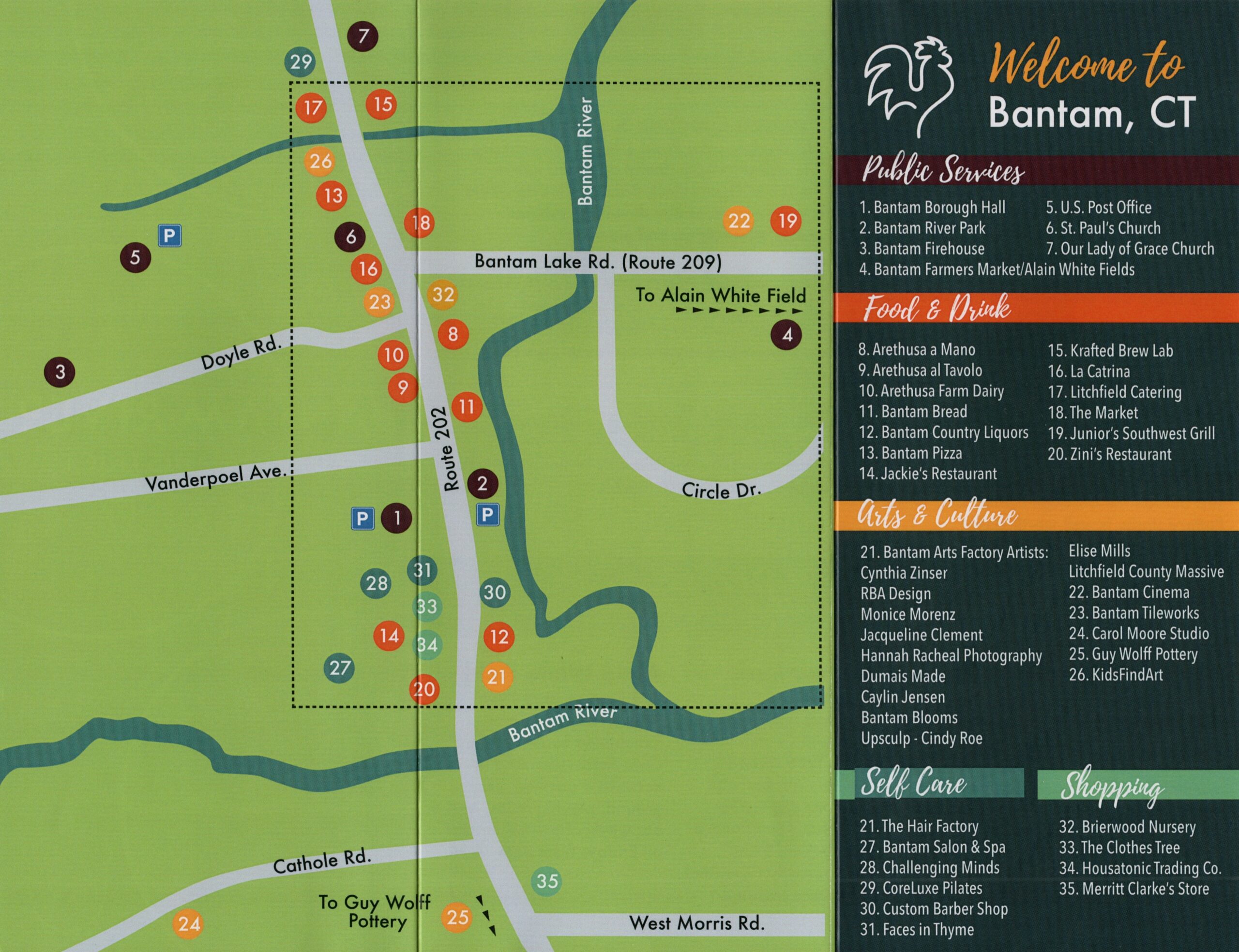
The independent and creative spirit of the Bantam section of Litchfield, centered on the one-square-mile Borough of Bantam, has been recognized and honored with its designation by the state as the Bantam River Cultural District.
When Lieutenant Governor Susan Bysiewicz and other Connecticut dignitaries gathered for a celebration of the new distinction at Bantam Borough Hall on May 15, they highlighted a district with natural beauty, deep-rooted history, and a current status as hub of arts & culture, shopping, and dining.

What is the Bantam River Cultural District?
The Bantam River Cultural District is committed to celebrating and supporting local artists and makers by creating a walkable, safe, and vibrant hub of creativity, culture, and community along the banks of the Bantam River.
To understand what makes the designation special, it helps to look at the state level. According to the Connecticut Office of the Arts (COA), the state’s Cultural Districts Program is designed to spotlight walkable, buzzing hubs where art, culture, and community collide. These official districts help market local cultural attractions, provide critical resources to local artists and creative businesses, and strengthen the distinctive character of Connecticut’s towns.
No two districts in the state are the same, and Bantam’s designation perfectly mirrors its longstanding reputation as a rural home for builders, innovators, and artisans.
Built on a Legacy of Makers
Bantam has always charted its own path. Its name stems from the area’s Native American peoples, who lived around Bantam Lake and used the word peantum, meaning “he prays, or is praying.” By 1716—before the Town of Litchfield was even fully formed—the land was officially purchased under the Bantam name.
In the 1700s and 1800s, the rushing waters of the Bantam River powered sawmills, gristmills, and factories. It was Bantam’s immigrant artisans whose craftsmanship built the famous historic estates of Litchfield. After several devastating fires, the Borough of Bantam was formally incorporated in 1915 to fund its own fire department. It grew into a manufacturing stronghold, reaching its apex during World War II.
A Modern Arts & Culture Haven

Today, the Bantam River Cultural District spans a walkable square mile packed with creative energy.
- The Arts Scene: The historic Bantam Cinema & Arts Center anchors the community, offering a mix of first-run and independent films, as well as community events. The Bantam Arts Factory serves as a collective of ateliers for local artists, featuring spaces like the Dumais Made ceramics studio. The district is also home to individual masters of their crafts, including the internationally renowned Guy Wolff Pottery, and Bantam Tileworks.
- Local Bites & Shopping: Creativity extends well into Bantam’s culinary scene. Grab an artisan roast at Krafted Brew Lab or indulge in a scoop from the famous Arethusa Farm Dairy. Source homemade loaves at Bantam Bread. For a nostalgic bite, head just west on Route 202 to the Gooseboro Drive-In, a landmark known for decades for its award-winning hot dogs, soft-serve, and summer memories – and don’t miss the Bantam Community Farmers Market every Friday from 3-6 p.m. from May into October at Alain White Field on Route 209.
Connect with Nature and History
The cultural district is defined by its geography. Visitors can spend a quiet moment at Bantam River Park, located on the former site of the Bantam Methodist Church, destroyed by the infamous tornado of 1989. The park overlooks Bantam Falls, and features historical displays, including a 19th-century carriage built right here by the Flynn & Doyle factory.
If you want to stretch your legs, the district is adjacent to the trails of the White Memorial Conservation Center and the Litchfield Land Trust’s Prospect Mountain Preserve. You can even rent a kayak from Litchfield Paddle and spend an afternoon floating on the Bantam River and exploring Bantam Lake, Connecticut’s largest natural lake.
Plan Your Creative Getaway
The Bantam River Cultural District is proof that a community doesn’t need to be massive to leave a monumental impact. It’s a place where history is preserved, independent businesses thrive, and art is woven into the fabric of daily life.
To explore upcoming artist exhibits, local festivals, film screenings, and a full directory of businesses within the district, check out the resources provided by the Litchfield Arts Council and map out your next adventure on Visit Litchfield CT.
Come see where the river flows and creativity grows!

